





Music Hall gets final OK for $166M nonprofit bond issue for expansion after years of stops and starts
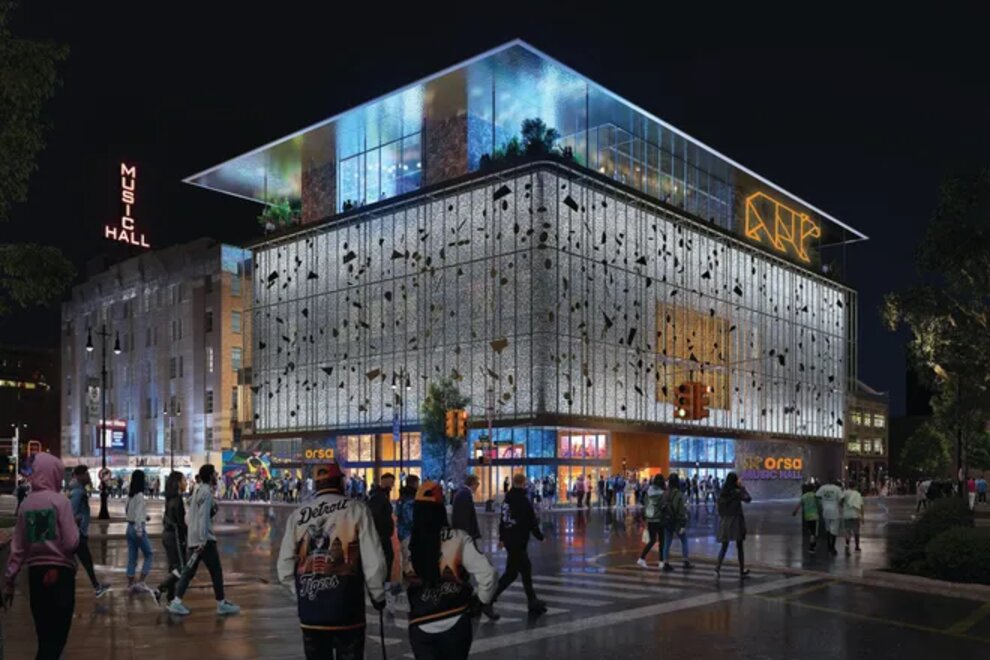
Music Hall Center for the Performing Arts’ years-long push to finance an expansion of its historic Detroit site took a key step forward this week.
If all goes according to schedule, it plans to break ground this summer.
After several stops and starts, the Detroit Economic Development Corp. on Tuesday gave final approval to the issuance of $166 million in not-for-profit bonds that will fund the expansion and first few years of debt service on them while construction is underway.
Music Hall is tapping 501(c)(3) tax-exempt bonds, a finance product used in affordable housing, nonprofit hospitals and university projects across the country but something leaders don’t believe has been used in Detroit since the late founder of Michigan Opera Theatre (now Detroit Opera), David DiChiera, used them to finance the renovation of the Michigan Opera House in Detroit 25 years ago.
The arts organization is in final negotiations with underwriters that plan to do a private, institutional offering of the bonds, Music Hall President Vince Paul told Crain’s, pointing to a planned June 29 closing date for the bond issue.
Following the closing, Barton Malow Co., the general contractor on the project, will demolish a guard shack and level the parking area to prepare it for a mid-July groundbreaking, Paul said.
In addition, Music Hall plans to launch a $55 million campaign as the first phase of fundraising to pay back the bonds, which will come with annual debt service of just more than $11 million, he said.
Slated for the vacant lot next to Music Hall’s historic home in Detroit’s Foxtown neighborhood, the expansion has been in development since 2022 when members of the arts organization’s board acquired the property for the project.
The new Orsa Music Hall building—named in honor of a $20 million commitment that Orsa Credit Union made in January to art and education programs there — will include a contemporary concert venue with capacity for 1,900 people, recording studios, offices for agents and other music industry professionals, a music academy and two restaurants operated by Music Hall.
Music Hall had planned to break ground last year but paused the project following the unexpected death of its senior development and financial adviser on the project, Ghebre Mehreteab, in August.
Mehreteab, the former CEO of national affordable housing developer National Housing Partnership Foundation for 20 years, was a member of the team that worked on the “Grand Bargain” during Detroit’s bankruptcy and other local efforts for the New York-based Ford Foundation.
“It became apparent, especially with Gabe’s death, because he was our primary fundraiser, that we were not going to be able to complete the project even though we had $80 million,” Paul said.
Music Hall hired Philadelphia-based financing consulting firm PFM, which has an Ann Arbor office, to take on oversight of financing for the project and discovered the capitalized interest and debt reserve required by underwriters had not been included in the initial calculations for the costs of the project, Paul said. Consequently, it had to restart the whole process.
Music Hall’s mission is about the preservation of music, education and presentation, he said.
“To continue to produce music and preserve the music industry, we need to replace the infrastructure that went into that identify that we currently have,” Paul said. Needed are music academies, music stores, recording studios and gathering spaces where artists can exchange ideas and network, he added.
The Music Hall expansion will bring all of those things, Paul said. It will also create new sources of earned revenue that will take Music Hall from a mid-sized arts organization operating on a $10 million budget to a $35 million organization, he said.