
Ask Vince Ask Vince

America’s Musical Treasure
FULL HISTORY

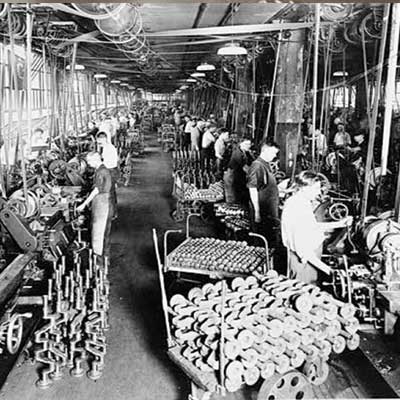
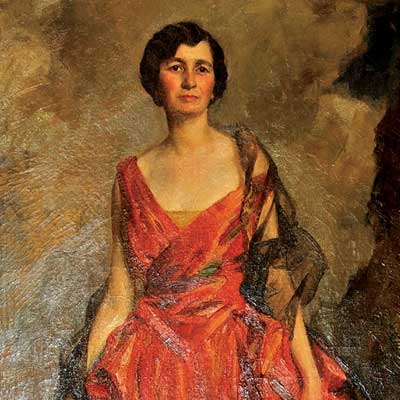
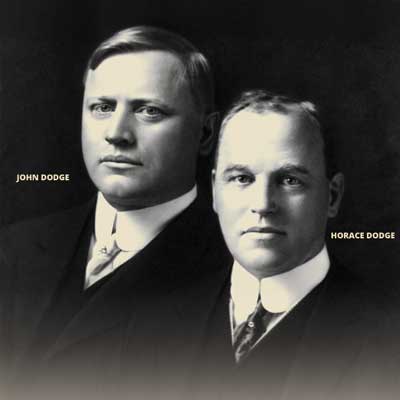
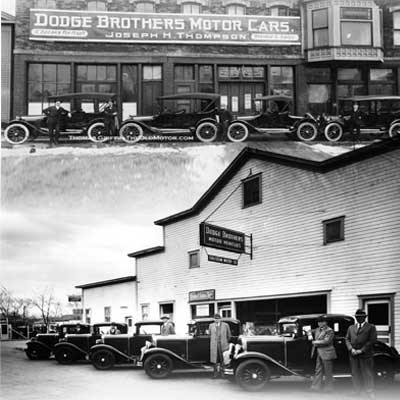
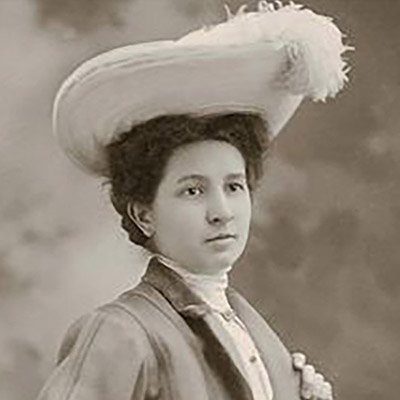
Matilda Rausch Dodge Wilson, visionary founder of Music Hall, was born in Walkerton, Ontario in 1883, moving with her family to Detroit at the age of 1. In 1902 she graduated from the Gorsline Business College and went to work for the Dodge Brothers, John and Horace, at their Hamtramck firm.

The professional relationship between John and Matilda developed into a personal one and in 1907, they married. In 1920, while in New York City on business, John contracted influenza and died. His brother Horace would die less than twelve months later, leaving the widows in charge of the firm. They sold it in 1925, becoming two of the wealthiest women in the country. That same year, Mrs. Dodge re-married Alfred G. Wilson, a lumber broker from Wisconsin.
Read more

MUISC HALL TIMELINE

Historic Timeline
DEC. 9, 1928
MATILDA RAUSCH IS BORN. Music Hall's visionary founder moved to Detroit with her family at the age of 1.
1905
MISS RAUSCH ENTERS THE WORKFORCE. Graduates from Gorsline Business College and goes to work for the Dodge Brothers in their Hamtramck Machine Shop.
10-JAN-1907
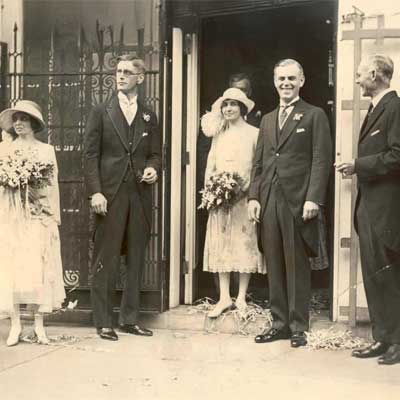
INTRODUCING MRS. JOHN DODGE. As his personal secretary, Matilda became indispensable to John, and romance bloomed. She meets his three children (from his first marriage) on their wedding day! Together they added three children of their own: Anna Margaret, Daniel, and Frances.
1920
INFLUENZA STRIKES. On a business trip to New York City, John Dodge contracts the flu and passes away. His brother Horace would die less than 12 months later.
1921
THE LADIES REIGN. With the death of both brothers, Matilda Dodge and Horace's widow Anna Thomson Dodge manage the Dodge Brothers Motor Car Company, until the sale and subsequent re-sale to Walter P. Chrysler in 1925 for $146 million ­— the largest cash sale of an American company to date.
1925
A NEW MARRIAGE. Late in 1924, just a few months after losing her youngest daughter Anna to complications from the measles, Matilda is courted by lumber baron Alfred G. Wilson. They marry.
1928
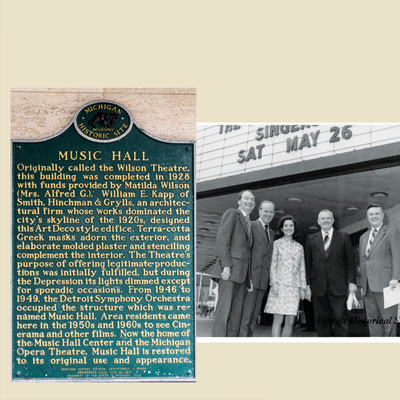
Alfred's love of music marries Matilda's love of theater and architecture. They commission architect William Kapp from the firm of Smith, Hinchman & Grylls to design a theater for Detroit to rival the best in London and Europe, touring the great houses across the pond wtih Mr. Kapp and his team in tow. Mr. Kapp was also engaged by the couple to build Meadowbrook Hall, now on the campus of Oakland University.
17-JUL-1928
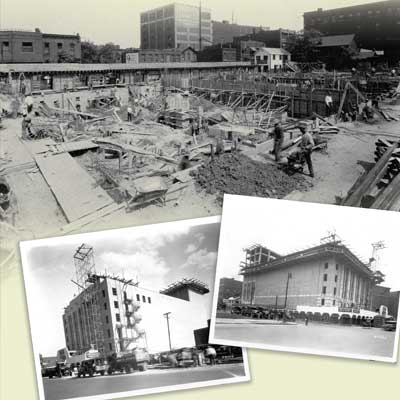
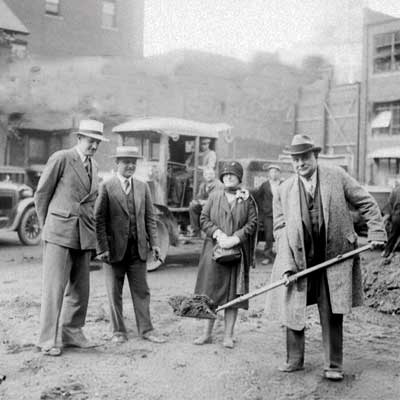
GROUNDBREAKING. The construction firm 'Bryant & Detwiler Co. General Builders' was engaged and made Matilda's vision into reality.
1928
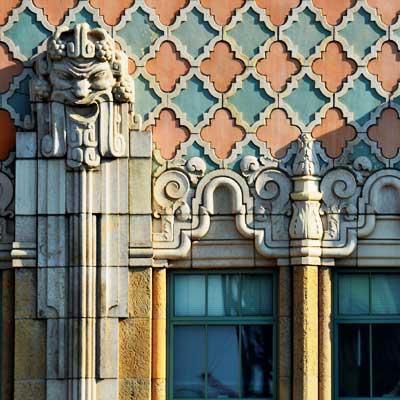
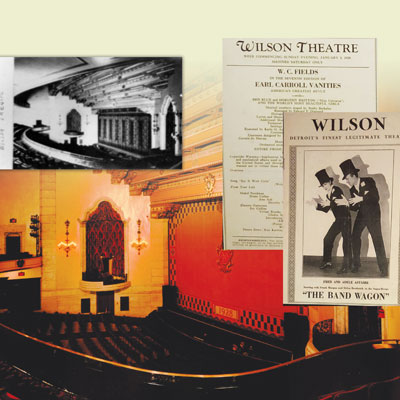
The multicolored terra cotta wall is adorned with masks representing comedy and drama, rendered by Italian sculptor Corrado Parducci. The interior is lush Spanish Renaissance and Art Deco…curved wood paneled walls, silk draperies, and an opulent lobby. In accordance with Matilda's exacting specifications, the Main Hall boasts perfect acoustics and clear sight lines. There is not a single partial-view seat in the house!
9-DEC-1928
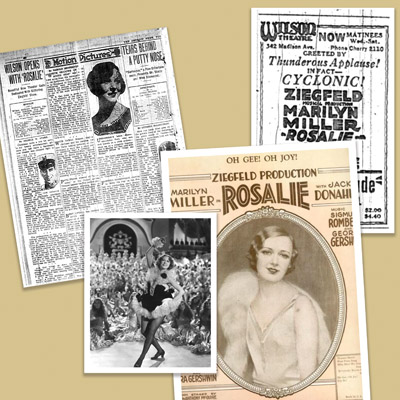
OPENING NIGHT: THE ZIEGFELD FOLLIES. Tickets started at $1.00, and patrons could call “Cherry 2110” for the box office. With music and lyrics by George and Ira Gershwin, the show dazzled Broadway and set the standard for musical theater to come. Florenz Ziegfeld, inspired by Paris’s Folies Bergère, became one of Broadway’s original star impresarios—bringing music, dance, and spectacle to audiences across America.
1928
WHAT'S A 'LEGITIMATE' THEATRE? Dating back to the 17th century, only certain establishments were licensed by the English kings to produce 'spoken drama'. The definition evolved to qualify a venue as designed specifically for live performance.
25-JAN-1940
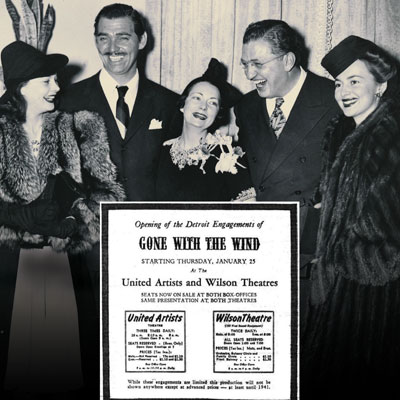
PREMIERE OF GONE WITH THE WIND Matilda personally calls Mr. David O. Selznick to make sure the Wilson gets the film first.
18-JUN-1941
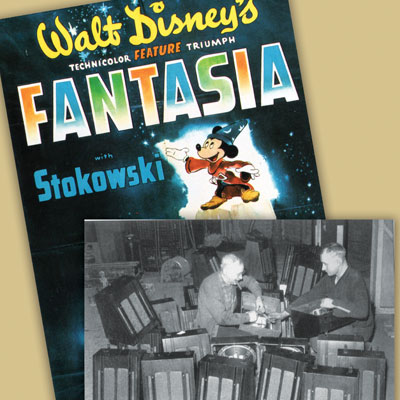
PREMIERE OF WALT DISNEY’S FANTASIA The Wilson Theatre is one of just fourteen houses in North America selected for this premiere. Walt Disney Studios carried out the installation of the 'Fantasound' ­— an early version of surround sound technology.
1944
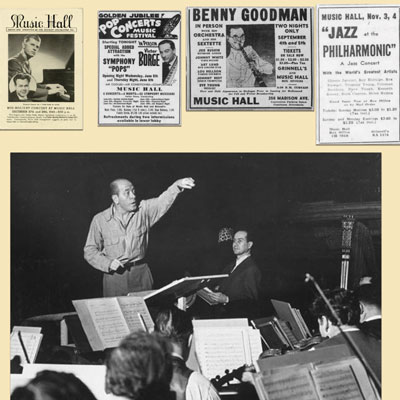
SALE, RENAMING, AND THE DSO DECADE Mrs. Wilson sells the theater to Mr. Henry H. Reichold, who re-christens it “Music Hall.” He adds broadcast capabilities so that the Detroit Symphony Orchestra can transmit the Ford Sunday Evening Hour to the nation. Famed conductor Eugene Ormandy is shown here conducting the Orchestra.
1947
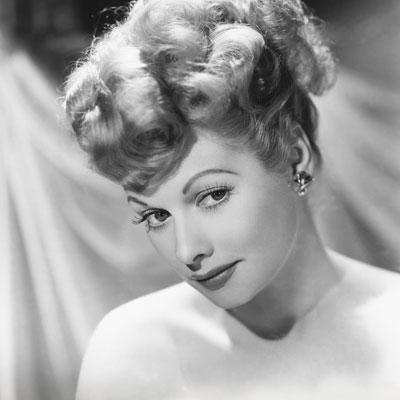
LUCILLE BALL, A PIT, AND A NET. Being not the first but (rumor has it) the fourth performer to fall into the orchestra pit while performing, the nation's beloved comedienne prompted the installation of a net to prevent future tumbles -- enabling decades more laughs with this steely funny lady.
16-MAR-1947
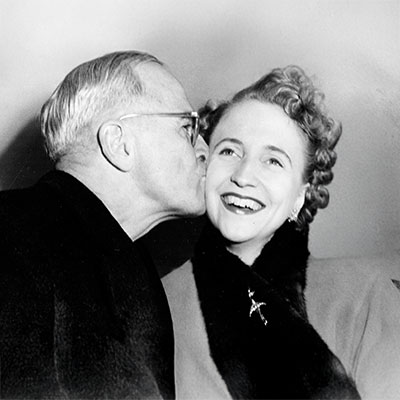
MARGARET TRUMAN PERFORMS. The President's daughter (against the advice of her singing teacher, who felt she needed a bit more practice), makes her radio singing debut on the Ford Sunday Evening Hour. Critics were not kind, and the protective father was not pleased. His note to one critic said that if they should meet, the man would need "...a new nose, a lot of beefsteak for black eyes and perhaps a supporter below."
1948
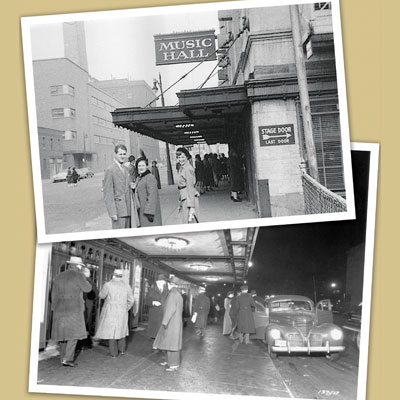
A STYLISH ERA. Music Hall sparkled with sophistication as Detroit’s finest filled the seats, dressed to the nines for evenings of live music, radio broadcasts, and elegant performances. The 1940s marked a golden age of glamour and cultural revival, when the Hall stood as both a community gathering place and a beacon of style in postwar Detroit.
1953
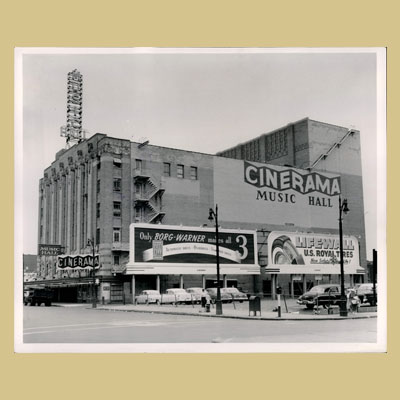
THE CINERAMA ERA BEGINS Steel company executive Mervyn Gaskin purchases the Music Hall and converts it into the most popular CINERAMA theater in the country, bringing stars and premieres to Detroit. The IMAX of its day featured an enormous curved screen, three synchronized projectors, and seven channels of stereophonic sound. Seating was reserved, and guests were guided to their seats by uniformed usherettes.
1971
MICHIGAN OPERA THEATER IS BORN The vision of Dr. David DiChiera is now in residence at the Detroit Opera House (formerly the Capitol Theater) just up the street. Until 1985, MOT added opera to the mix of productions at the Music Hall, in keeping with Mrs. Wilson's original intent to create a European- style variety house.
1974
SAVED FROM THE WRECKING BALL! City planners declared their intention to merge Madison & Gratiot Avenues, demolishing Music Hall in the process. Thanks to the intervention of a dedicated team of Trustees, the Detroit Renaissance business coalition, the Kresge Foundation and other community leaders, this grande dame stands proud today, listed on the National Register of Historic Places.
1986
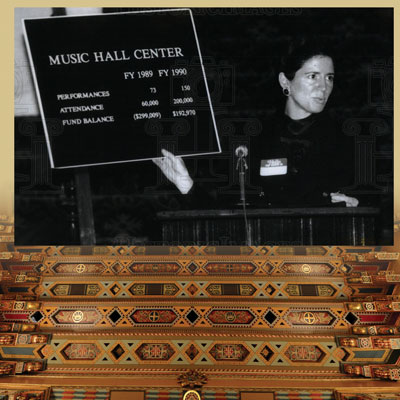
A Five-Year Strategic Plan and a $6.5M renovation. Under the leadership of Henrietta Fridholm, Music Hall begins a Capital Campaign in conjunction with a forward-facing Strategic Plan to renovate the Hall and restore its original one-of-a-kind historic ceiling.
1986
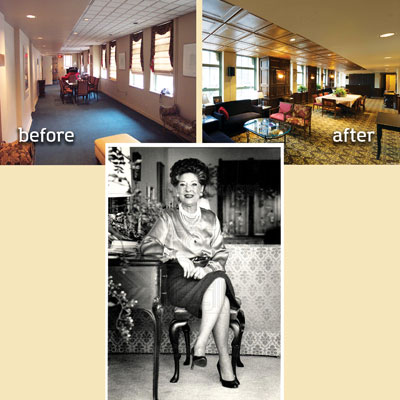
DEDICATION OF THE SELMA HYMAN TRUSTEE LOUNGE Established by her sons Henry Ross and Allen Ross, a Music Hall Trustee, this second floor lounge pays tribute to Ms. Hyman's dedication to Music Hall and love of the arts. Photos show Mrs. Hyman, along with an early interpretation of the room and its current look.
1991
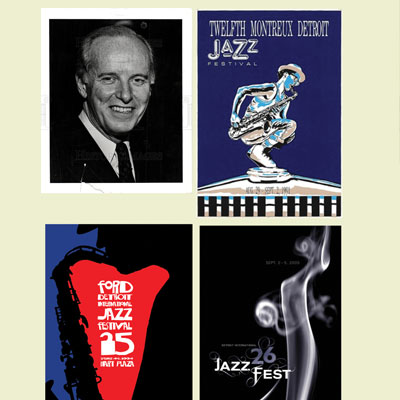
THE MONTREUX DETROIT INTERNATIONAL JAZZ FESTIVAL BEGINS A 15-YEAR RESIDENCY Founded in 1980 by Music Hall Trustee Bob McCabe, the festival began a 15-year residency at Music Hall, becoming the world’s largest free jazz event and paving the way for Detroit Music Weekend.
1996
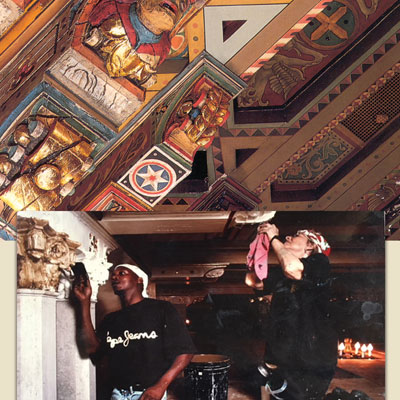
RENOVATION This classic Art Deco beauty is restored in minute detail to its original grandeur from its coffered ceilings to French silk draperies and grand opera boxes.
2006
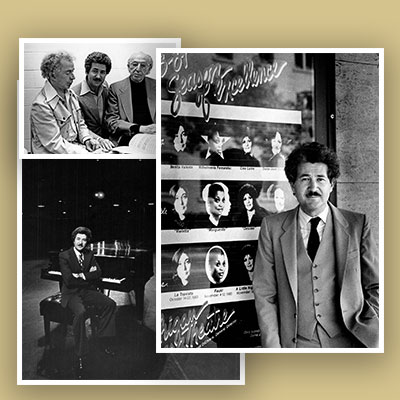
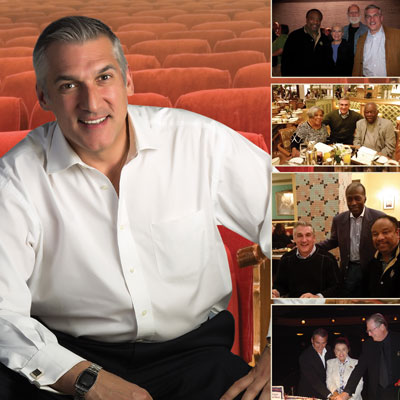
NEW LEADERSHIP In 2006, under the leadership of Alex L. Parrish, the Board of Trustees hired Vincent C. Paul to usher in a new generation of audiences and supporters. A native of Detroit and an MSU graduate, Vince returned to Detroit after 25 years based in NYC but travelling the world as a global impresario. Innovation and more restoration was soon to follow...
2006
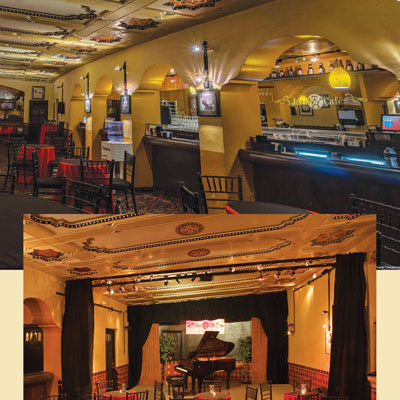
OPENING OF THE JAZZ CAFÉ Formerly the coat check room, the intimate 100-seat space opened to immediate acclaim as one of the City's best spots to catch national and international artists as well as up-and-coming local talent.
2006
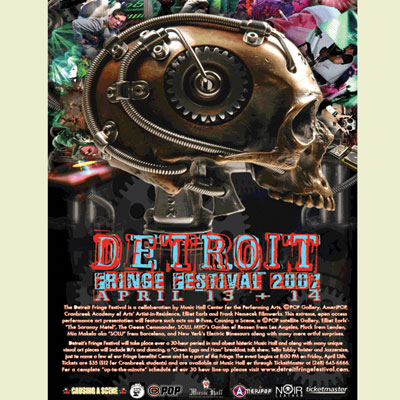
FIRST EVER DETROIT FRINGE FESTIVAL Thirty hours. Non-stop. Open access. Held in and around the Music Hall building, the performances included … just about everything that's difficult to put a label on. From stilted guitarists to giant TeleTubbies, this event definitely kicked off a global recognition of how cool Detroit is.
2007
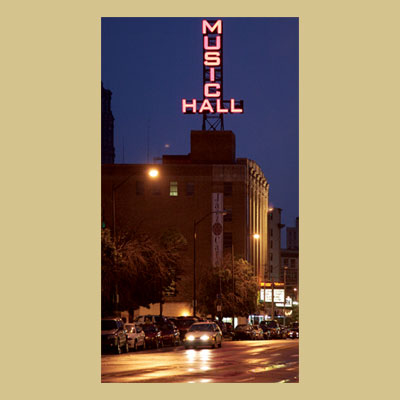
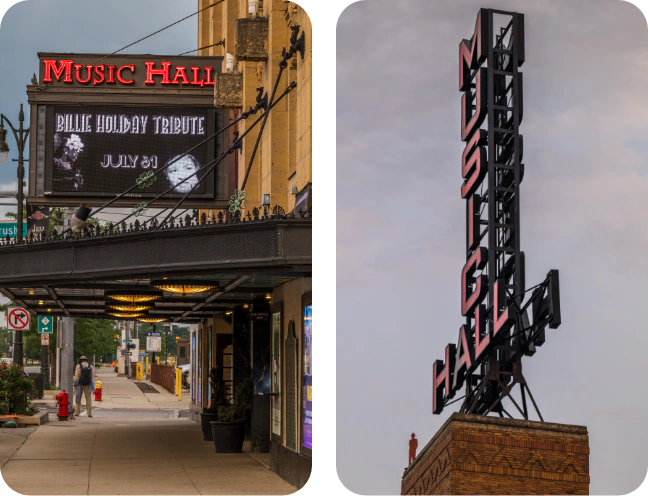
TOWER SIGN RE-INSTALLED Missing for almost three decades, the glorious vintage neon “Music Hall” sign was removed from storage and completely restored. Italian craftsmen supplied some of the crucial parts, and Detroit’s own Nelson Iron Works did the rest. The “flipping of the switch” was quite a celebration!
2009
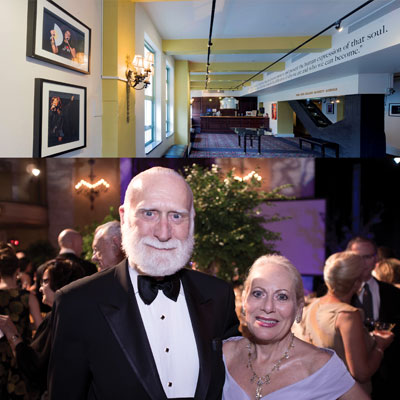
DEDICATION OF THE TINA AND LELAND BASSETT LOUNGE The third floor mezzanine lounge was rededicated to two of Music Hall’s most ardent supporters over a 40-year (and going strong!) period of time.
2009
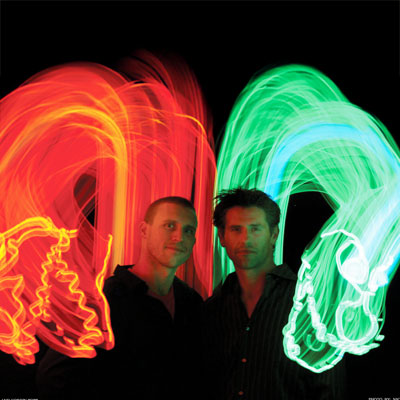
A MUSIC HALL COMMISSION: ‘DARWIN THE DINOSAUR’ Born at Music Hall, Darwin the Dinosaur by Lightwire Theater proved why live theater can’t be replaced by video. Using glowing electroluminescent wire to bring characters to life, the show became a global hit, touring worldwide with Detroit’s name shining bright.
2012
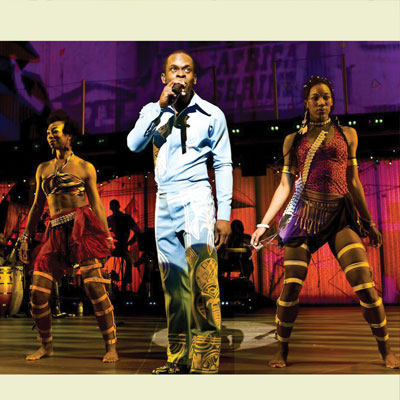
FELA! THE MUSICAL In 2012, Music Hall hosted FELA! The Musical—a Broadway sensation celebrating the life, music, and activism of Afrobeat pioneer Fela Kuti. The three-week run became a Detroit phenomenon, uniting tens of thousands of students, educators, community leaders, and music fans.
2014
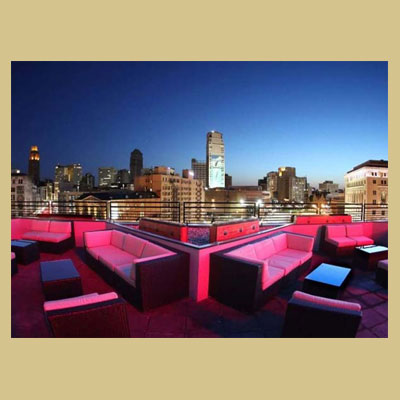
3FIFTY TERRACE: A NEW VIEW OF AN OLD CITY Opportunity: seized. Routine roof repairs led to a brainstorm led to the creation of the city’s favorite breezy summer hotspot, 3Fifty Terrace. The sweeping seventh story views of Detroit’s incredible architecture shifted the paradigm, reminding everyone how great it feels to be in the heart of the city.
June 10, 2017
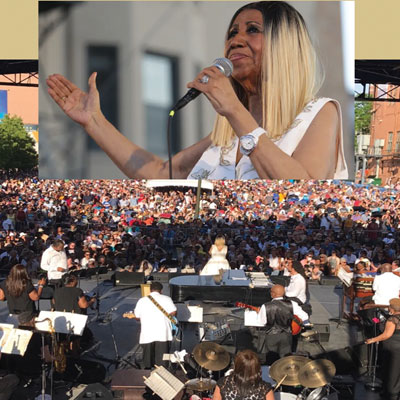
ARETHA FRANKLIN HEADLINES INAUGURAL DETROIT MUSIC WEEKEND In 2017, Music Hall launched Detroit Music Weekend, a citywide celebration of every genre that makes Detroit legendary — from Motown to techno, gospel to rock. Aretha Franklin headlined the inaugural event, performing her final public concert for tens of thousands downtown. In 2018, honoring her legacy, our Jazz Café became Aretha’s Jazz Café.
2018
When arts vanish from public schools, opportunity fades with them. Music Hall is changing that—bringing music, theater, and dance education to over 22,000 Detroit students each year. Powered by generous supporters, we’re ensuring every child has access to the arts and the opportunities they create.
Welcome to the Julius V. Combs

Music Hall Archive Gallery

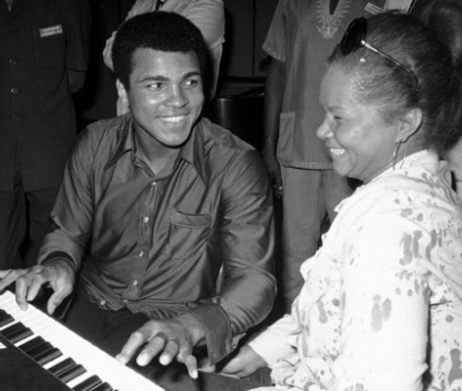
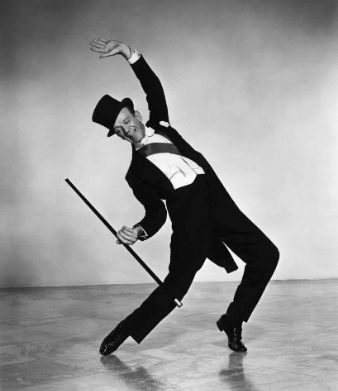
Celebrate 90 years of Detroit's Music Hall with this free, immersive exhibit on the 5th floor. Open weekdays 10am–6pm and during shows, the gallery highlights nine decades of performers, events, and unforgettable moments.

Step off the vintage elevator into a journey through Detroit's performing arts history — explore decade-by-decade or dive into digital exhibits on dance, stage plays, or jazz. Sit in plush red velvet for a CINERAMA throwback, try the conductor's podium, or peek into a 1928 dressing room.
Where History Comes Alive

Tour of Music Hall

Since the day we opened our doors in 1928, Music Hall has been a downtown Detroit cultural icon -- changing and evolving to serve the community over nine decades.

In 2006, under the leadership of Chairman Alex L. Parrish, the Board of Trustees hired Vincent C. Paul as President and Artistic Director. A Detroit native, Vince returned home after a twenty-year show business career based in New York and traveling the world. In 2008 the global financial crisis severely impacted the funding models of Detroit arts & cultural institutions, requiring an innovative approach. Mr. Paul brought that and more, creating sustainability and leading Music Hall into a new era. A former cloakroom became the space now known as Aretha's Jazz Cafe. A raw rooftop with stunning 360 city views became the wildly popular 3Fifty Terrace, and an unsightly surface lot -- the lush garden oasis that is the Music Hall Amphitheater.

In 2024, Music Hall remains true to its roots as a 'variety house' -- presenting a wide spectrum of music, theater, and dance. If our work is hard to categorize, then we're doing our job -- offering an inclusive place of cultural community where we gather old friends and new to celebrate and share our cultural best.